Anchoring Bias
The first number heard distorts all those that follow.
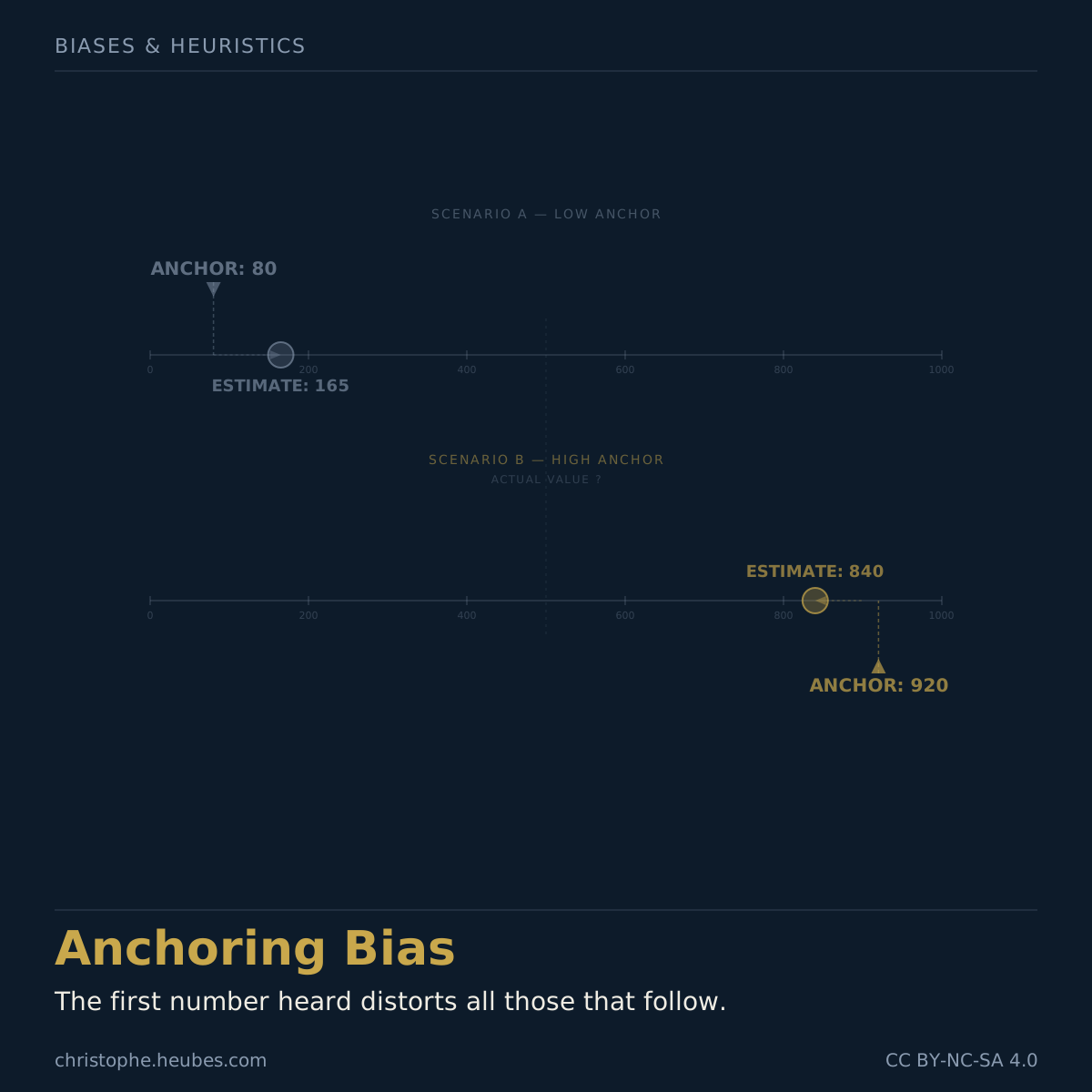
Definition
Anchoring bias is a bias described by Daniel Kahneman and Amos Tversky in their foundational work on the psychology of judgement. It refers to the tendency to give excessive weight to the first piece of information received when making a decision or estimate.
Once an “anchor” is set, whether relevant or arbitrary, all subsequent adjustments remain close to it. Even when we consciously know the anchor is irrelevant, it continues to influence the final outcome.
“People make estimates by starting from an initial value that is adjusted to yield the final answer. Adjustments are typically insufficient.” — Kahneman & Tversky, 1974
Why it matters
Anchoring is one of the most robust and exploited cognitive biases:
In negotiation: the first offer placed on the table (even an absurd one) sets the reference frame. A seller who opens at £120,000 makes £90,000 seem “reasonable”: even if the property is worth £70,000.
In retail: displaying a “struck-through” price (old price) before the promotional price directly exploits anchoring. The perception of the discount depends on the anchor, not the real value.
In medicine: the first diagnosis given by a doctor acts as an anchor for all subsequent ones. Diagnostic errors often persist because no one questions the initial anchor.
In management: targets set at the start of the year act as anchors for year-end reviews, even when the context has radically changed.
Concrete examples
The lottery wheel experiment: Kahneman and Tversky asked subjects to spin a wheel (rigged to stop at 10 or 65), then estimate the percentage of African countries in the UN. The group that got 65 gave an average of 45%, versus 25% for the group that got 10.
Salary negotiations: in many recruitment processes, whoever announces a number first (candidate or employer) anchors the negotiation. Revealing your current salary immediately fixes the discussion range.
Fines and penalties: the initial amount of a fine, even an absurd one, acts as an anchor in reduction negotiations. Courts do the same with damages claims.
Counter-measures: generate your own estimate before hearing others’, deliberately expose several alternative ranges, and create decision procedures where the initial anchor is not visible (e.g., sealed-bid auctions).
The anchor doesn’t need to be credible to work.