Loss Aversion
Losing £100 hurts more than gaining £100 feels good.
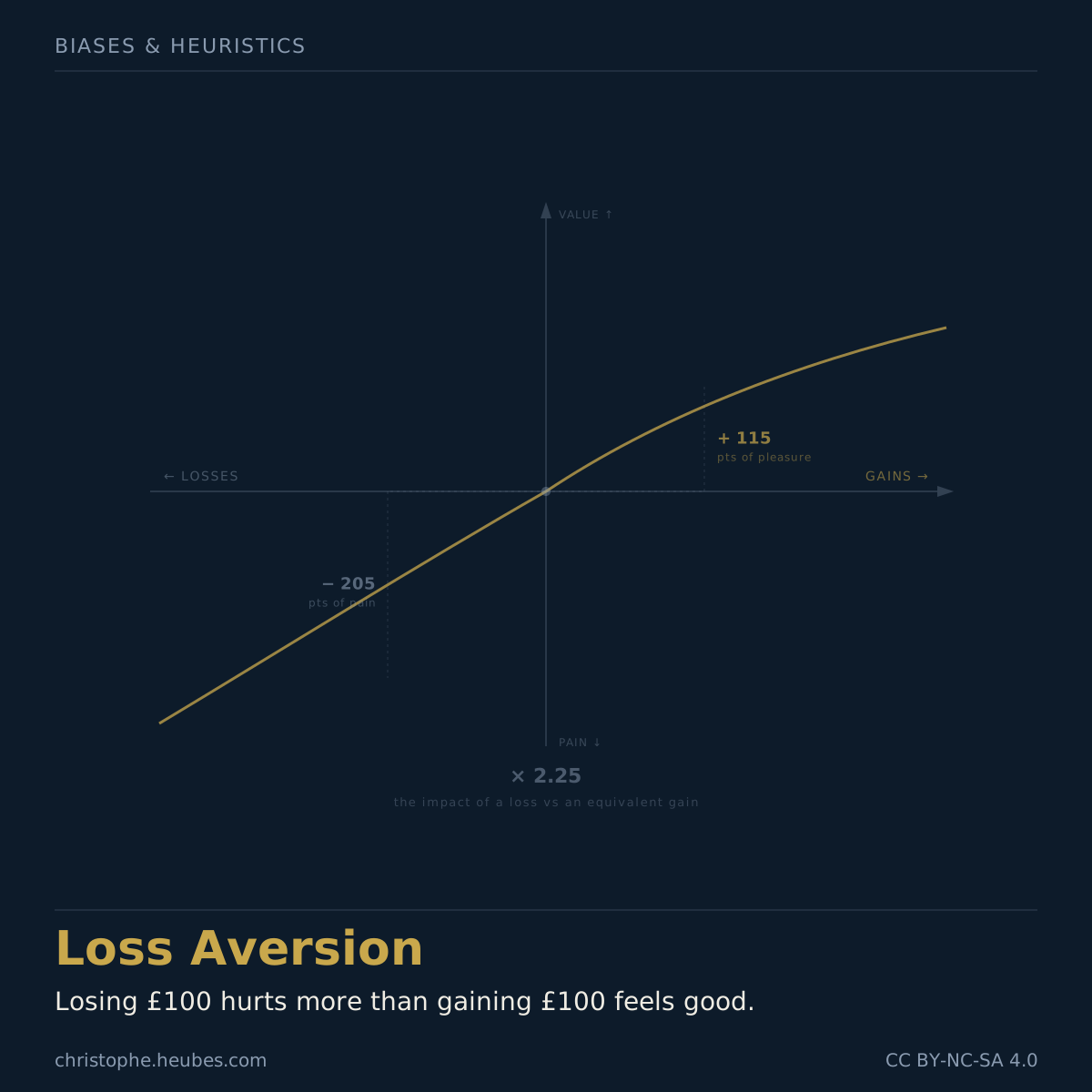
Definition
Loss aversion is a central principle of prospect theory, formulated by Daniel Kahneman and Amos Tversky in 1979. It states that the psychological suffering caused by a loss is approximately twice as intense as the pleasure produced by an equivalent gain.
This is not a matter of objective value. It is a fundamental asymmetry of human psychology: losing £100 weighs psychologically as much as gaining £200.
“Losses loom larger than gains of the same size.” — Kahneman & Tversky, 1979
Why it matters
Loss aversion explains a multitude of irrational behaviours:
In investing: investors hold losing positions for too long (hoping to “recover”) and sell winning positions too early (afraid to “lose again”). This is the disposition effect, described by Shefrin and Statman.
In management: fear of losing existing benefits (salary, status, perks) is a far more powerful driver of resistance to change than the promise of future gain.
In negotiation: framing an offer as “avoiding a loss” rather than an “opportunity for gain” makes it statistically more persuasive.
In public policy: reforms that remove existing benefits (even inefficient ones) face far stronger resistance than those that simply fail to create new ones.
Concrete examples
The endowment effect: we value an object we already own more than the same object we don’t yet have. Thaler showed that people refuse to sell their coffee mug for less than twice what they would have agreed to pay for it.
Over-insurance: we overbuy warranties and insurance to avoid unlikely losses, even when the premium exceeds the expected value of the coverage.
Status quo bias: we prefer to change nothing even when changing would be objectively advantageous, because any change involves potential losses.
Marketing “losses”: “don’t miss this offer” or “only 3 left in stock” directly exploit loss aversion to accelerate purchasing decisions.
Counter-measures: reframe status quo decisions as active choices (“choosing not to change = accepting X”), evaluate missed opportunities with the same rigour as actual losses, and create pre-established rules for investment or divestment decisions.
We don’t play to win. We play not to lose.