Placebo Effect
Belief heals as much as the remedy.
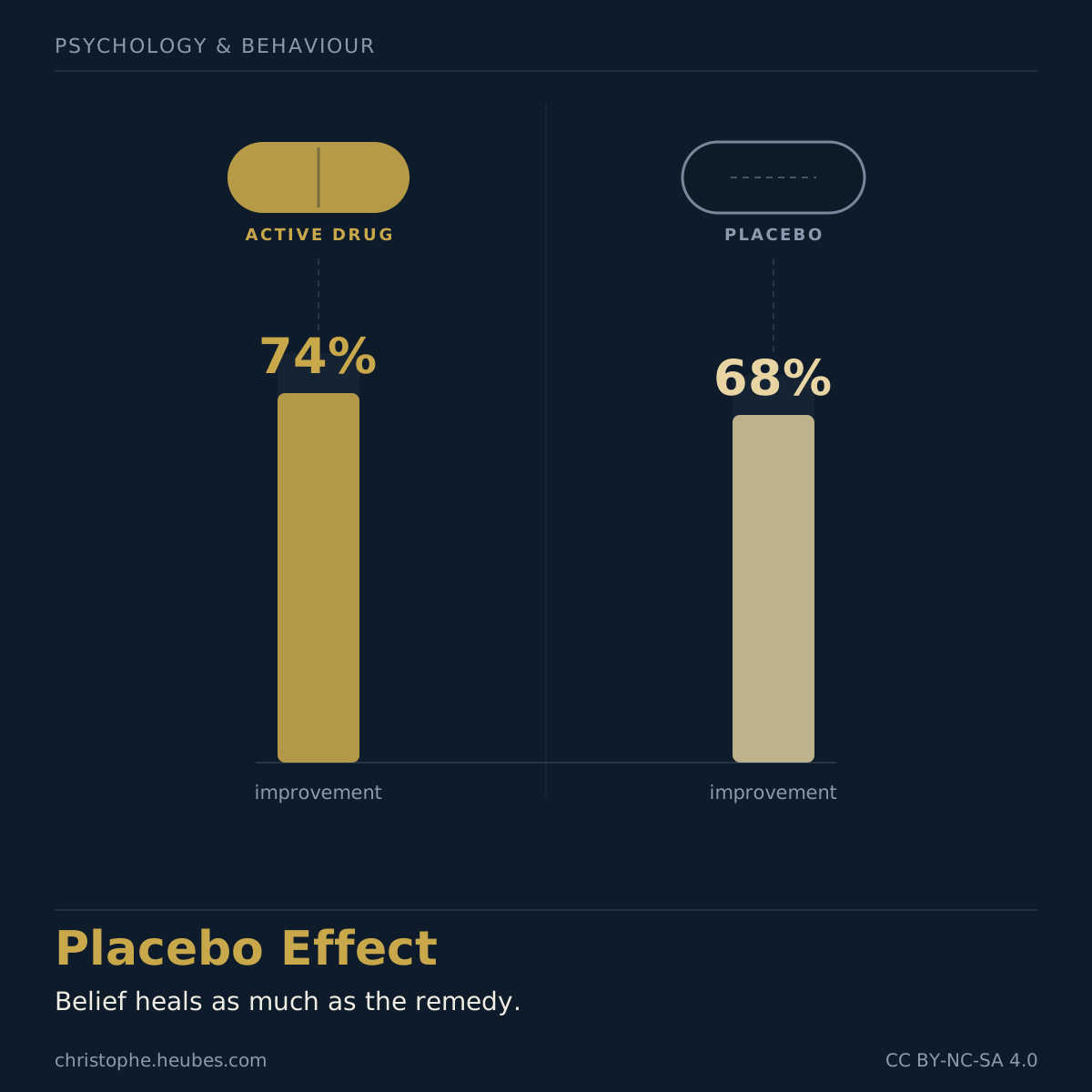
Definition
The placebo effect refers to the improvement of a health condition (or performance) produced not by an active substance, but by belief in the effectiveness of the treatment.
The term comes from the Latin placebo, “I will please”, and originally referred to remedies with no active substance given to satisfy the patient. Since the 1950s, it has been central to all randomized double-blind clinical trials.
Why it matters
The placebo effect reveals that biological reality is partly constructed by our mental representations. It is not an illusion, it is real physiology:
- Placebos trigger the release of measurable endorphins
- They alter brain activity visible on MRI scans
- Their effectiveness is proportional to the quality of the doctor-patient relationship
- “Open-label” placebos (where the patient knows they’re taking a placebo) still work
Concrete examples
Medicine: in some trials, placebos achieve 30 to 40% effectiveness for chronic pain, insomnia, and even Parkinson’s symptoms.
Sport: athletes told they received a performance-enhancing substance (without receiving one) show measurable performance improvements.
Management: positive feedback from a respected manager objectively improves subsequent performance, even if the feedback concerned an unrelated task.
Decaf coffee: subjects told they’re drinking caffeinated coffee show increased alertness even with decaf.
What we believe is possible partly determines what is possible. Belief is a biological mechanism, not a metaphor.