Spotlight Effect
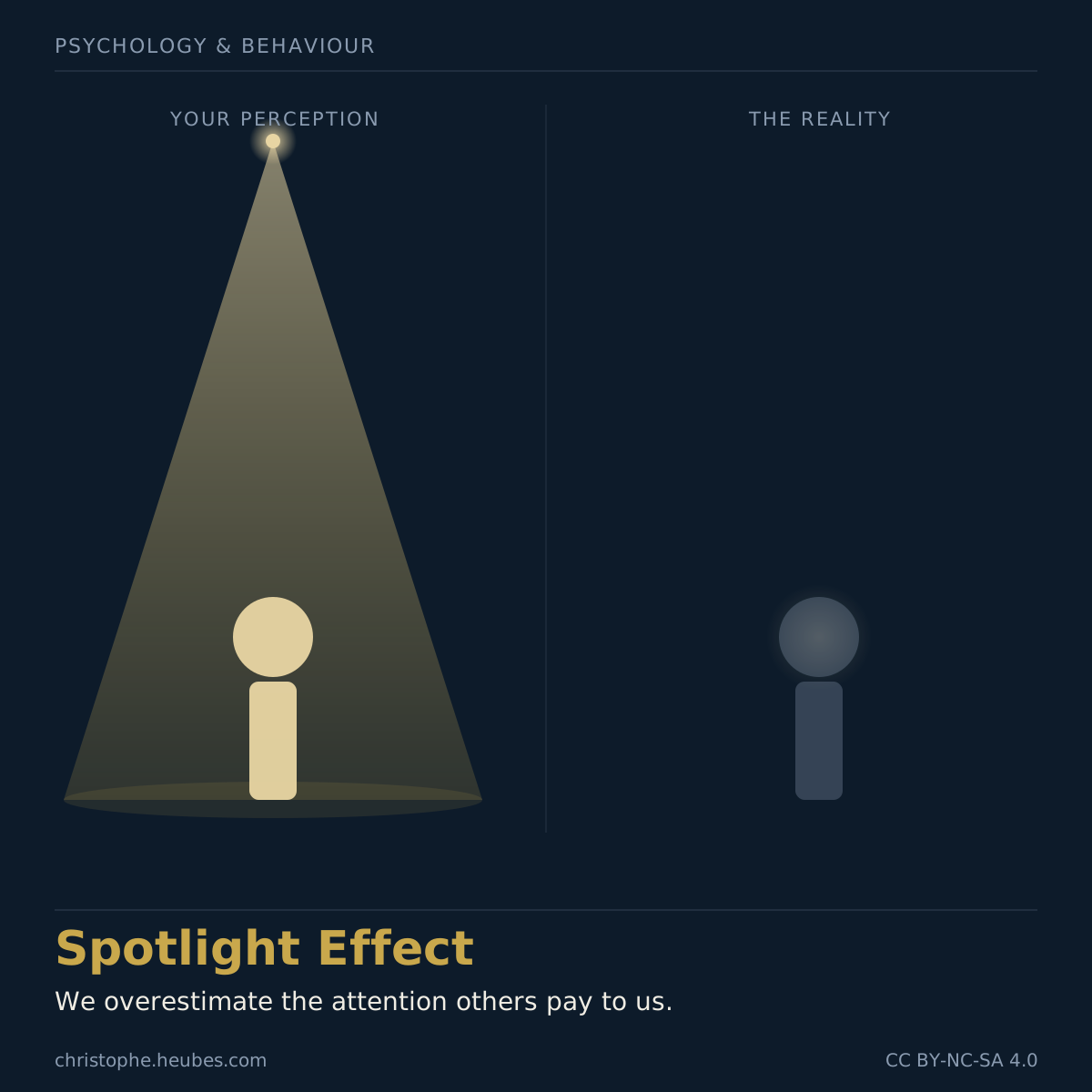
We overestimate the attention others pay to us.
Definition
The Spotlight Effect is a cognitive bias documented by psychologists Thomas Gilovich and Kenneth Savitsky in 2000: we systematically overestimate the degree to which others notice and judge our appearance, mistakes, and behaviors.
We feel as if we’re under a permanent spotlight, visible, observed, remembered. In reality, everyone is absorbed by their own inner spotlight.
Why it matters
This bias has concrete consequences on our decision-making:
- We avoid speaking up for fear of judgment
- We don’t dare try new things to avoid “looking ridiculous”
- We over-explain and over-apologize (no one noticed the original mistake)
- We replay embarrassing situations that others forgot long ago
The spotlight effect is a social anxiety multiplier, and a barrier to risk-taking.
Concrete examples
The founding experiment: Gilovich asks students to wear an embarrassing T-shirt (with Barry Manilow’s photo) and enter a room. The wearers estimate that 50% of people will notice it. Reality: 25%.
In meetings: you make a factual error in a presentation. You think about it all week. Your colleagues forgot it the next day.
On social media: you spend 20 minutes crafting a comment that no one will read carefully. Your post is not at the center of others’ feeds, it drowns in them.
In management: a manager hesitates to share an unfinished idea to avoid “seeming incompetent.” In reality, showing your thinking in progress builds trust.
Nobody thinks about you as much as you think. That’s liberating.