Pygmalion Effect
Expectation creates reality.
Definition
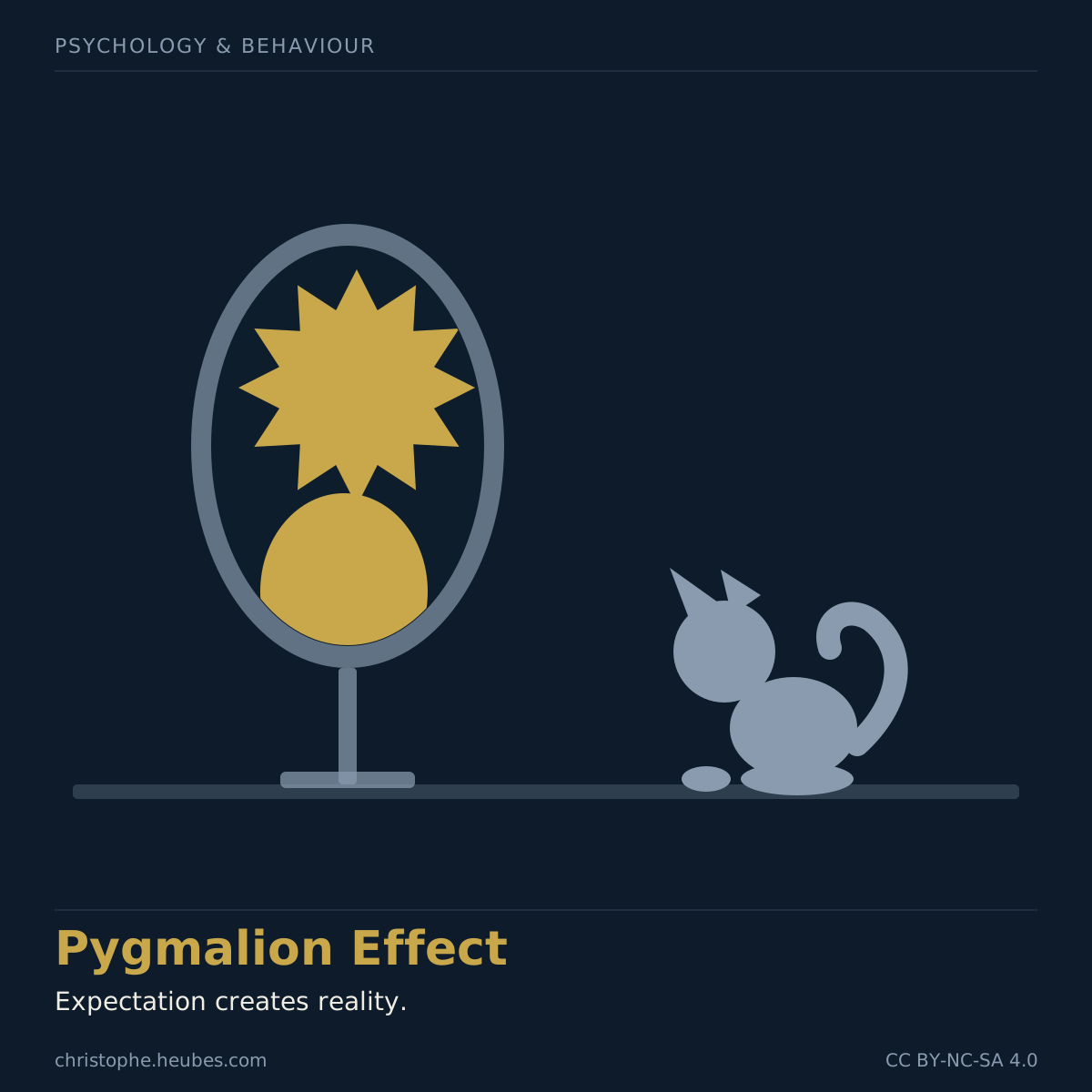
The Pygmalion Effect: also called the self-fulfilling prophecy or Rosenthal effect, refers to the phenomenon by which one person’s expectations of another genuinely influence that person’s performance.
It was formalized in 1968 by psychologist Robert Rosenthal and school principal Lenore Jacobson in a now-classic experiment: Pygmalion in the Classroom.
The loop is simple: High Expectation → Different Behavior → Higher Result → Reinforced Expectation.
Why it matters
The Pygmalion Effect is not an esoteric belief, it is a documented behavioral mechanism. Expectations are transmitted through often unconscious signals:
- Tone of voice, gaze, posture
- Quality and frequency of feedback
- Level of challenge in assigned tasks
- Reaction to mistakes
It works in both directions: low expectations (Golem Effect) degrade performance just as high expectations enhance it.
Concrete examples
The founding experiment: Rosenthal and Jacobson told teachers that certain students were “about to intellectually bloom” (chosen at random). A year later, those students had indeed progressed more, simply because teachers treated them differently.
Management: a manager who believes in their team delegates more ambitious challenges, gives richer feedback, offers more autonomy. The team responds to these signals: and confirms their expectations.
Recruitment: a recruiter convinced a candidate is strong will ask more open-ended questions, give them more time, interpret their hesitations as reflection. The candidate will perform better.
Parenting: children whose parents hold high (and positively expressed) expectations develop a more robust self-image and higher academic performance.
The expectations you hold for others are an active intervention: act accordingly.