Parkinson's Law
Work expands to fill the time available for its completion.
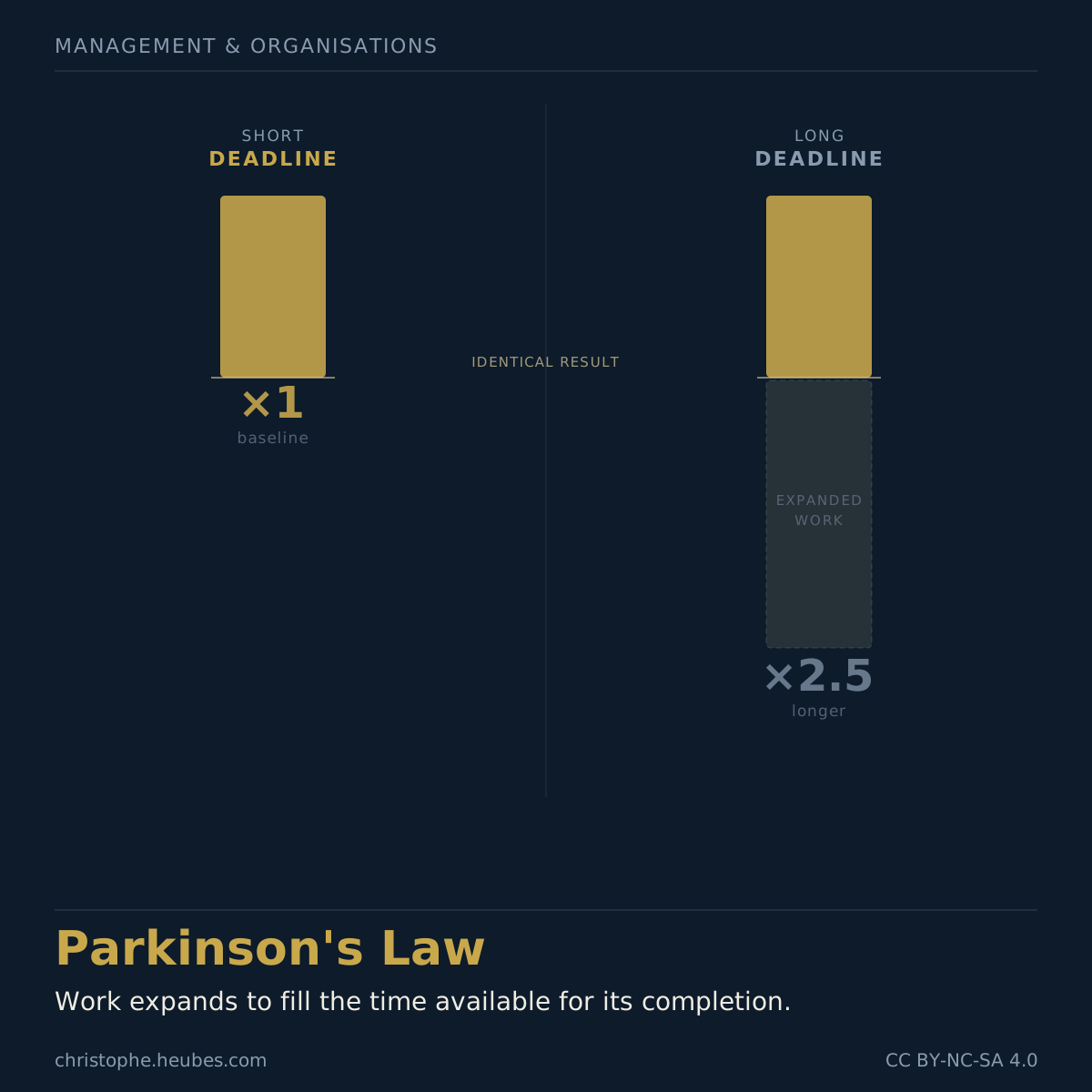
Definition
Parkinson’s Law was formulated by British civil servant and historian Cyril Northcote Parkinson in a satirical essay published in The Economist in November 1955:
“Work expands so as to fill the time available for its completion.”
This is not a simple observation about laziness, it is a systemic mechanism. Giving three weeks to a task that requires one leads to an unconscious multiplication of scoping meetings, validation loops, superfluous revisions, and value-free refinements. The task genuinely becomes three weeks’ worth of work.
Why it matters
Parkinson’s Law explains why:
- Projects systematically overrun their initial deadline rather than finishing early
- Meetings always last exactly the time blocked in the calendar invitation
- Budgets are almost always fully consumed, regardless of their size
- Large teams always find enough to keep every member occupied
It has a counter-intuitive implication: a tight deadline often improves quality. Constraint forces prioritisation, eliminates the accessory, and focuses attention on what truly matters. This is the foundation of Agile sprints, hackathons, and the concept of timeboxing.
Concrete examples
Professional report: a report due in 48 hours will be more concise and often more impactful than one due in 3 weeks, whose drafting will drag until the last day, swollen with revisions and unnecessary appendices.
Meeting: booked for 1 hour, it lasts 1 hour. Booked for 30 minutes, it lasts 30 minutes: and decisions are made just the same.
Budget: a department that receives a €100k budget will always find a way to spend it entirely, even if €60k was the genuine requirement.
Counter-measures: set artificially short deadlines, practise strict timeboxing, and apply the “done is better than perfect” rule to force delivery before the work dilates.
When you set a deadline, you’re not choosing how long you’ll work: you’re choosing how much work you’ll invent.