Learning Culture Lotus
Learn continuously, at every level.
Definition
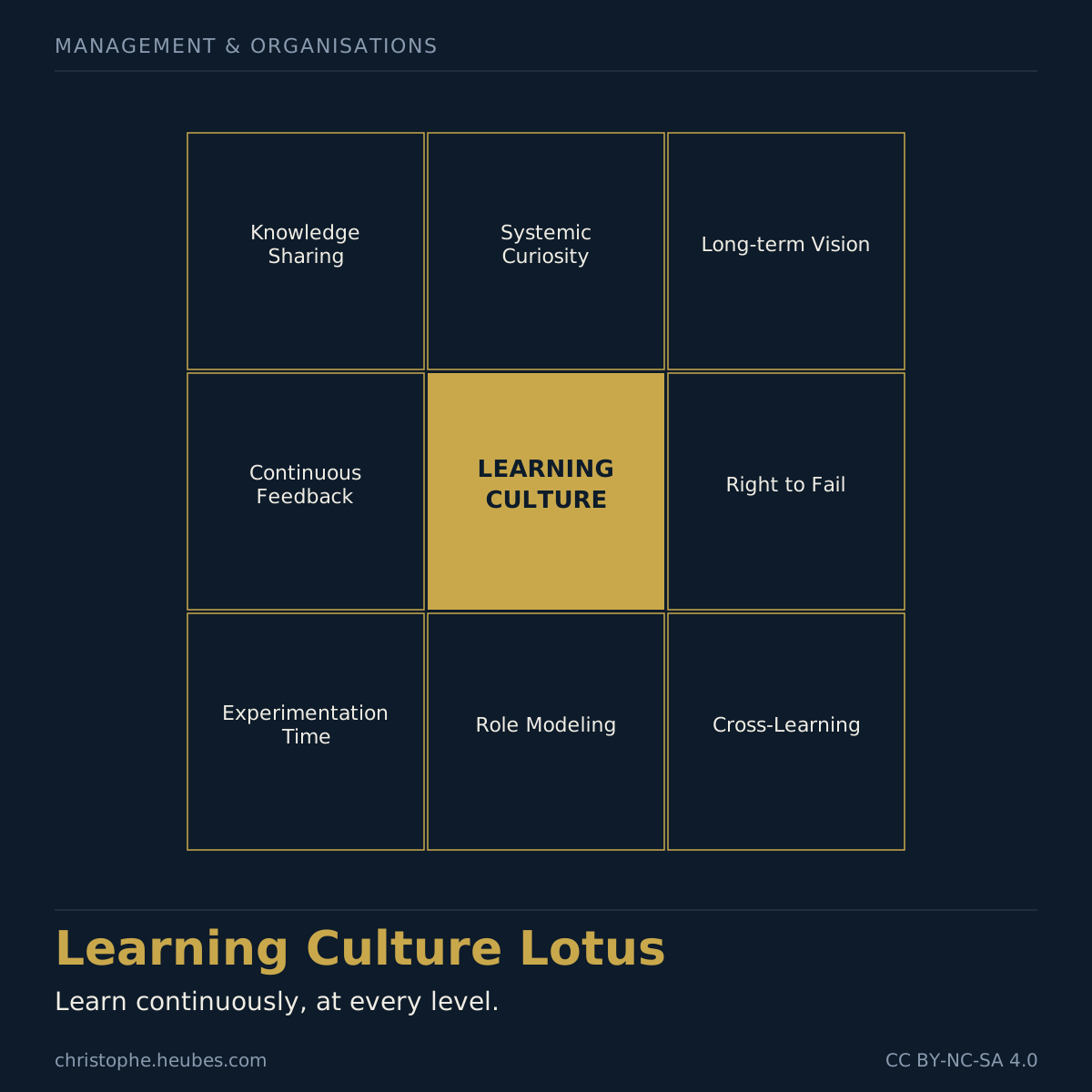
The Lotus model (or Mandala) is a structured thinking tool that starts from a central concept and breaks it down into 8 constituent dimensions, arranged around the center like flower petals.
Applied to learning culture, it identifies the 8 pillars that allow an organization to continuously learn:
| Dimension | Meaning |
|---|---|
| Systemic Curiosity | Questioning the status quo as a daily practice |
| Knowledge Sharing | Making knowledge accessible and circulating |
| Long-Term Vision | Investing in learning even without immediate ROI |
| Continuous Feedback | Creating short feedback loops |
| Right to Fail | Destigmatizing failure as a source of learning |
| Experimentation Time | Protecting unproductive time for exploration |
| Exemplarity | Leaders learn visibly and openly |
| Cross-Learning | Cross-pollination between disciplines, teams, sectors |
Why it matters
A learning organization is not one that organizes training sessions, it’s one where learning is structurally embedded in every interaction.
The organizations that survive major technological transitions share one characteristic: they institutionalized questioning. Not as an annual event, but as a habit.
Concrete examples
Toyota: Kaizen (continuous improvement) is not an HR program but a daily obligation at all levels. Every operator can stop the production line to flag a problem, learning is built into production.
Pixar: “Braintrust” meetings regularly bring together creatives for radical, honest feedback on films in progress. Continuous feedback and the right to fail are institutionalized.
Spotify: “fail walls” in offices publicly display team failures with lessons learned. The destigmatization of error is physically visible.
A learning culture is not decreed: it is built pillar by pillar, and each dimension strengthens the others.