Jevons Paradox
Efficiency increases consumption.
Definition
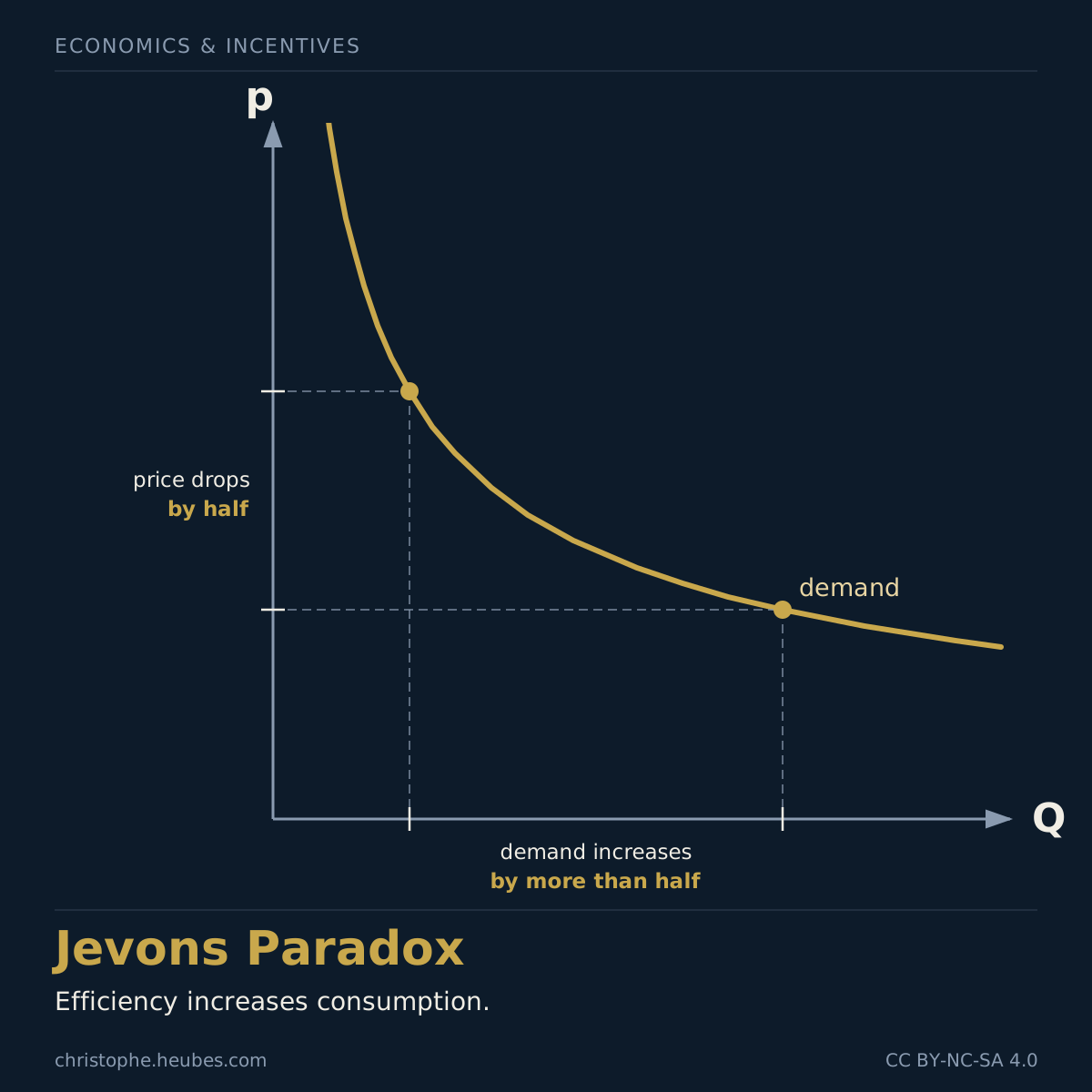
In 1865, British economist William Stanley Jevons observed that improvements in the efficiency of steam engines, thanks to James Watt’s work, did not reduce coal consumption in England. On the contrary, it caused it to explode.
The paradox bears his name ever since: any improvement in the efficiency of a resource’s use leads to an increase in total consumption of that resource, because the effective cost drops, which stimulates demand.
Why it matters
This paradox challenges a deeply held intuition: the idea that “doing more with less” is enough to reduce our impact. In reality, the rebound effect cancels out, and often exceeds, efficiency gains.
We find it everywhere:
- Transportation: more fuel-efficient cars encouraged more trips and larger vehicles.
- Digital: more efficient data centers enabled an explosion in the volume of data processed.
- Agriculture: better yields led to more land being cultivated.
Concrete examples
LED bulbs: an LED consumes 10× less than an incandescent. Result? We light more rooms, for longer, with more complex installations. Lighting electricity consumption has increased in several countries after mass adoption of LEDs.
Streaming: video compression continuously improves. Result? Higher resolutions, longer viewing sessions, more connected devices.
Individual productivity: productivity tools let us work faster, so we accept more tasks. Time saved is immediately reabsorbed.
Efficiency is a necessary but not sufficient condition. Without a constraint on volume, it amplifies consumption.