Hindsight Bias
"I knew it all along."
Definition
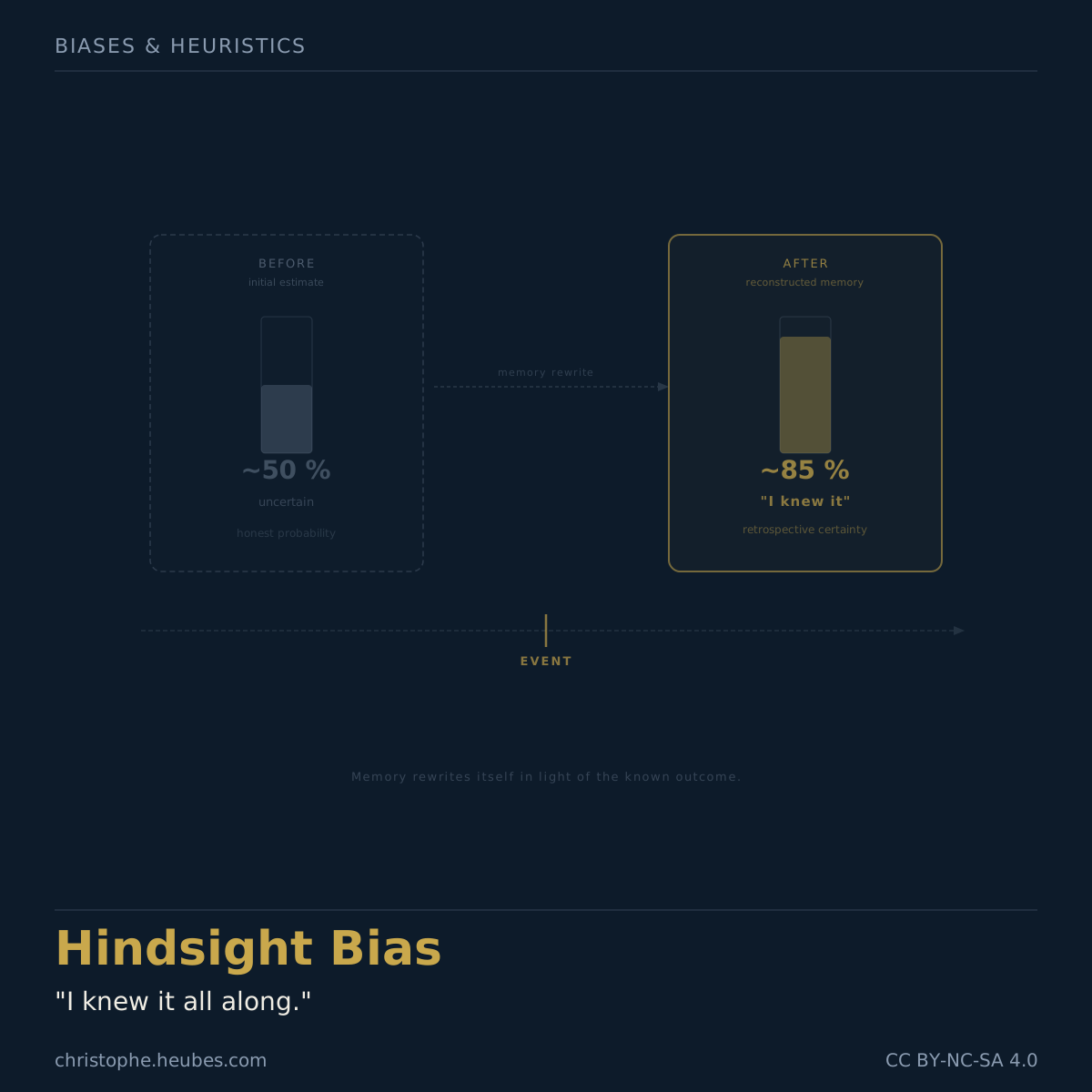
Hindsight bias is the tendency, once an event has occurred, to believe you could have predicted it. Memory does not faithfully preserve our past states of uncertainty: it rewrites them in light of what we now know.
Baruch Fischhoff demonstrated this experimentally in 1975: participants told the outcome of an event systematically estimated they would have assigned it a high probability beforehand, even when they had not.
Why it matters
This bias is particularly dangerous in the evaluation of past decisions. It makes post-mortems inaccurate: decisions are judged with the certainty of hindsight, without reproducing the uncertainty of the moment. It also fuels overconfidence: if we feel we “knew” in advance, we mistakenly believe we are good forecasters.
In organizations, it leads to biased retrospectives (“it was obvious that project would fail”) and a poor learning culture.
Concrete examples
Stock market crash: “Everyone could see it was going to collapse.” A retrospective certainty that erases the genuine uncertainty of the time.
Election result: “With a candidate like that, the result was never in doubt.” Yet nobody announced it with confidence before the vote.
Production bug: “We should have tested that case anyway.” But the case was not obvious before the bug occurred.
Industrial accident: after the fact, investigators underestimate how ambiguous the warning signals were before the event.