Halo Effect
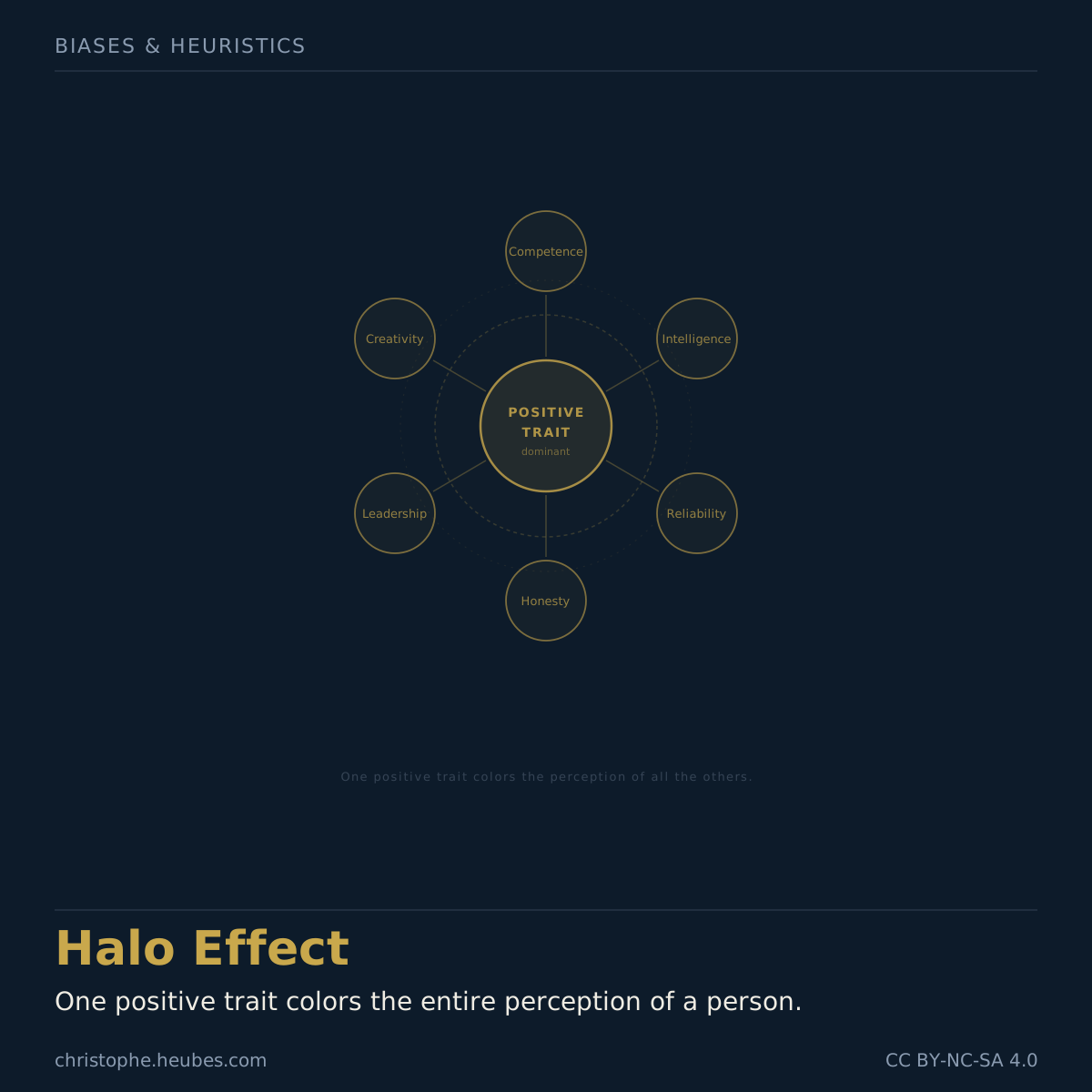
One positive trait colors the entire perception of a person.
Definition
The halo effect describes the tendency to let a general impression, often based on a single salient trait, color the evaluation of all other aspects of a person or thing. A professional judged as competent in one area will automatically be perceived as honest, reliable, and creative, even without any supporting evidence.
The term comes from the image of the religious halo: the light of one trait illuminates everything else. Edward Thorndike formalized it in 1920 by observing that military officers rated their soldiers consistently across all dimensions (intelligence, physique, leadership), even when those traits had no real correlation.
Why it matters
The halo effect deeply biases our professional and personal judgments. It explains why physically attractive candidates score higher in job interviews, why a charismatic speaker appears more competent than a quieter expert, and why premium brands seem better even when the product is objectively identical.
It is also the basis for the inverse, the horn effect, where one negative trait degrades the entire perception.
Concrete examples
Job interview: a well-dressed candidate is judged as more intelligent, regardless of their answers.
Apple: products from the brand are perceived as more reliable and innovative than equivalent competitors, thanks to brand halo.
Teacher evaluation: a teacher liked for their personality receives better evaluations of their content quality.
Charismatic CEO: assumed to have excellent strategic vision, a bias regularly exposed during corporate scandals.