Ringelmann Effect
The larger the group, the less each member contributes.
Definition
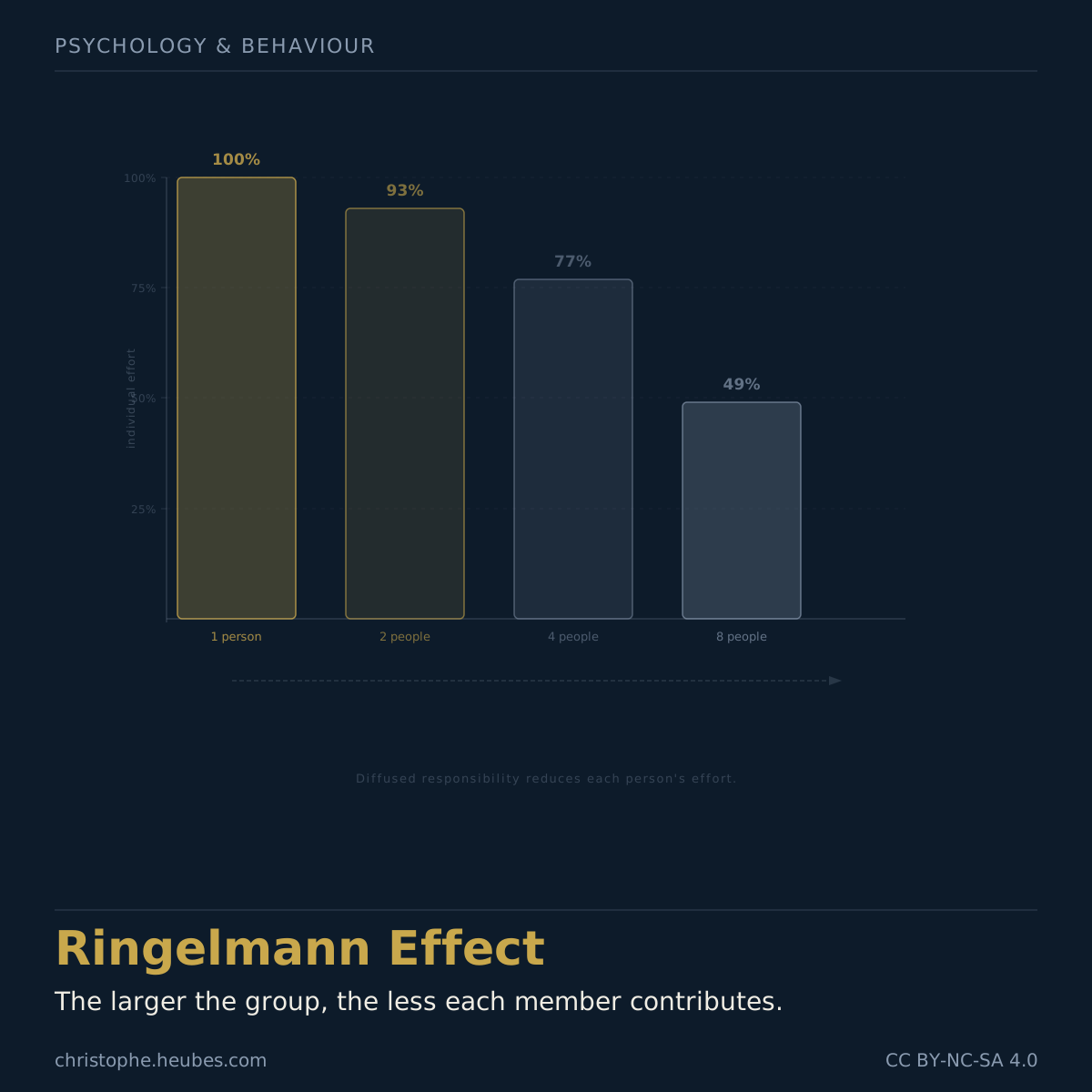
The Ringelmann effect is one of the earliest experimental discoveries in social psychology. Maximilien Ringelmann asked groups of people to pull on a rope and measured average effort per person. Result: 1 person = 100%; 2 people = 93% each; 4 people = 77%; 8 people = 49%. Individual effort collapses as the group grows.
Two mechanisms explain this: coordination loss (efforts are not perfectly synchronized) and above all social loafing: each individual reasons that others will make the effort, and unconsciously reduces their own.
Why it matters
This effect has direct implications for optimal team size. Studies on working groups show that beyond 5-7 people, individual contribution drops significantly. This is one of the reasons agile methodologies (Scrum, etc.) recommend teams of 5-9 people maximum.
It also explains why large meetings are unproductive: the more participants, the less each person feels responsible for contributing.
Concrete examples
12-person project: 3 or 4 members do the majority of the work, with others quietly free-riding on their involvement.
Large meetings: in a meeting of 20 attendees, only 3 or 4 voices actually speak.
Creative projects: the “too many cooks” phenomenon illustrates how multiplying contributors dilutes coherence.
Corporate or parliamentary committees: diffused responsibility leads to structural inaction.