Overton Window
Only ideas within the window are politically viable, and the window moves.
Definition
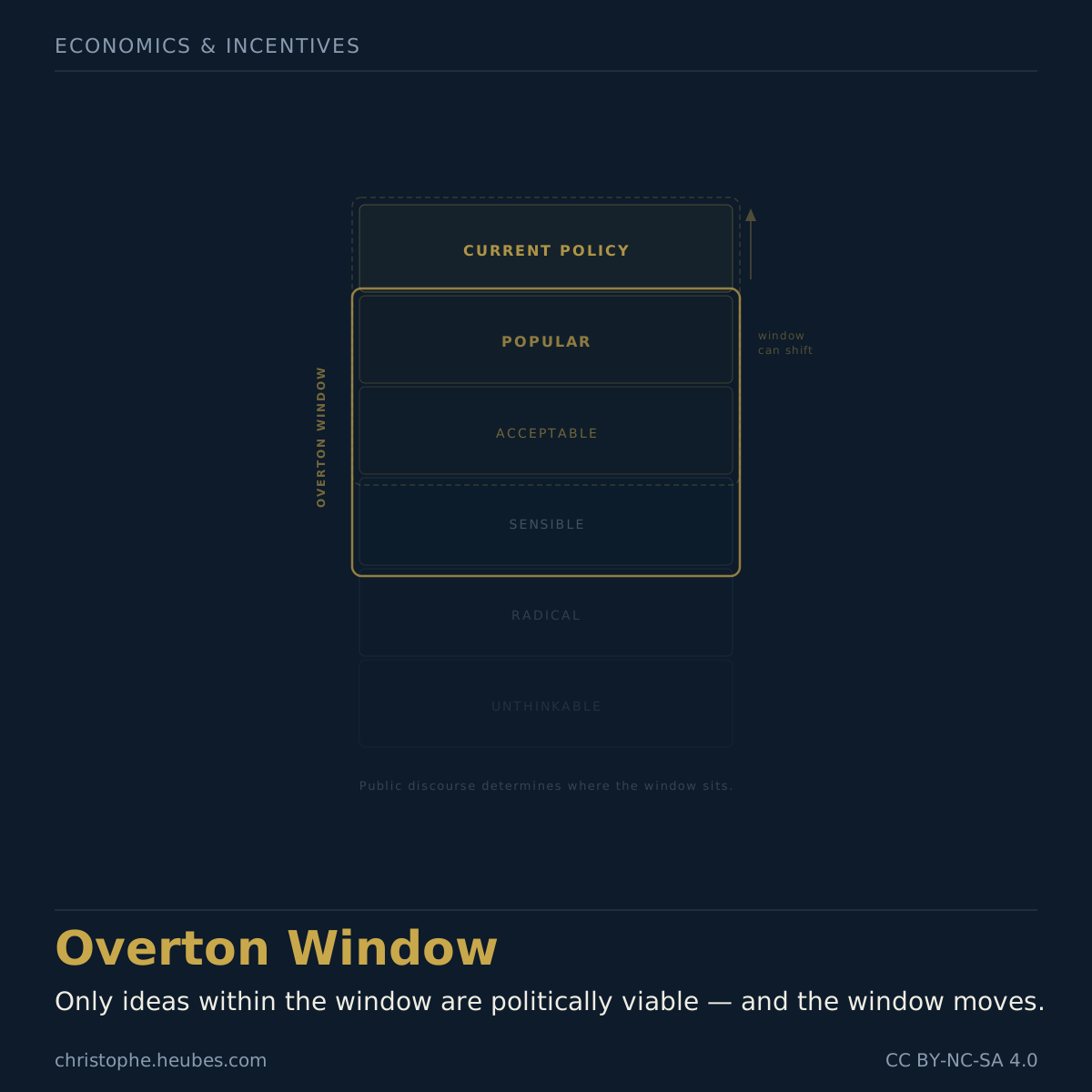
The Overton Window is the range of ideas a society considers acceptable at a given moment. It spans a spectrum from current policy down to unthinkable, passing through popular, acceptable, sensible, and radical.
What is remarkable is that this window shifts over time. Ideas once considered radical become acceptable, then popular, then law. Ideas once mainstream fall outside the bounds of legitimate debate. The shift is rarely caused by a single political actor: it results from the accumulation of discourse, crises, public figures, and social movements.
Why it matters
Understanding the Overton Window explains why some politically impossible proposals suddenly become feasible: not because decision-makers changed their minds, but because the space of the thinkable shifted. It also illuminates the strategy of actors who deliberately advance extreme positions to shift the center of gravity of debate.
Concrete examples
Same-sex marriage: unthinkable in the 1980s, radical in the 1990s, acceptable in the 2000s, and law in many countries in the 2010s.
Universal basic income: a fringe idea in the 1990s, it is now being piloted in several countries.
Crisis measures: economic proposals deemed extreme in normal times, such as nationalization or wartime spending, become acceptable during crises.