Brooks's Law
Adding developers to a late project makes it later.
Definition
Brooks’s Law is counterintuitive at first glance: one would expect that adding hands speeds up the work. But on a late software project, every new person must be trained, onboarded, and immediately generates additional exchanges with all the others.
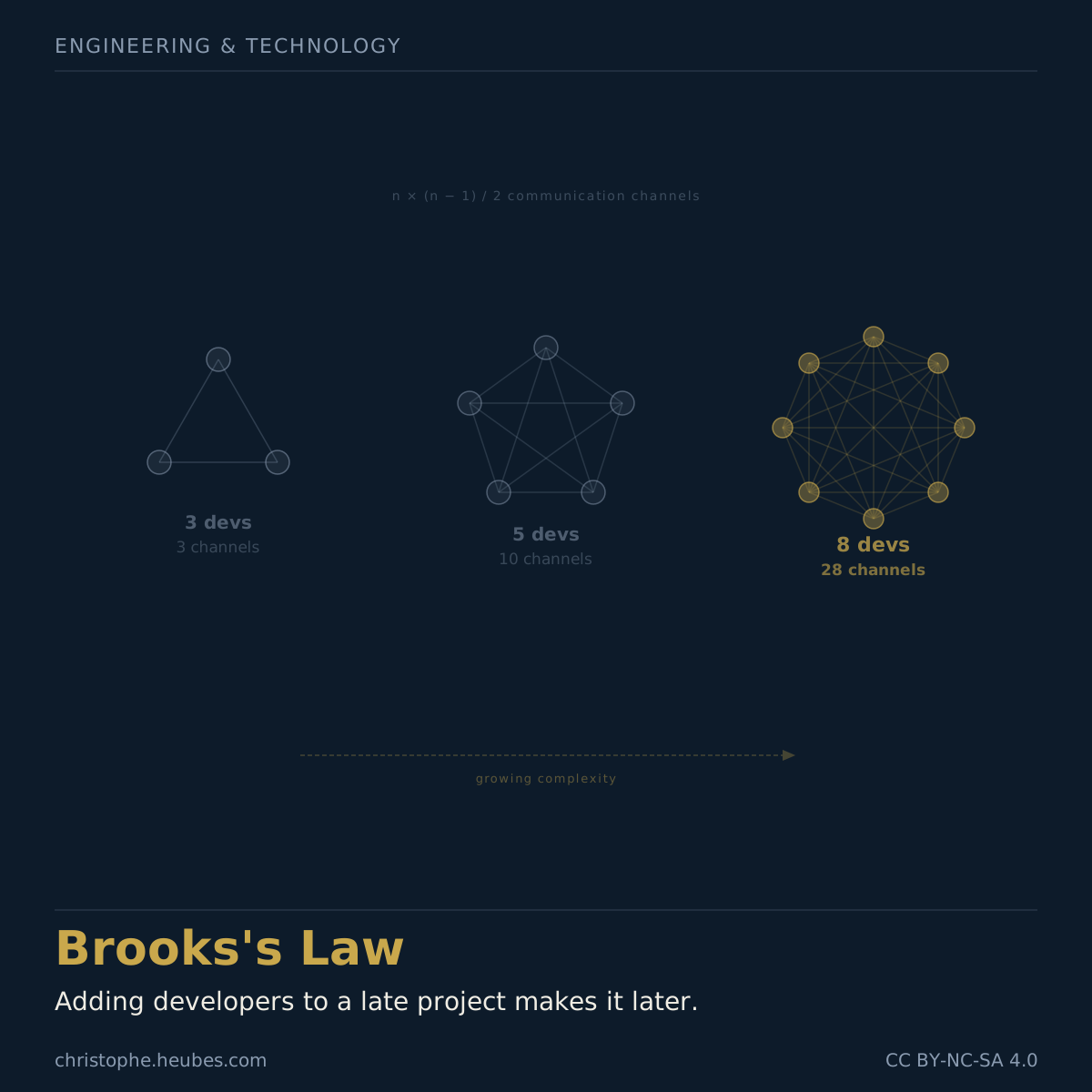
The number of communication channels grows as n(n−1)/2: 3 people → 3 channels, 5 people → 10 channels, 8 people → 28 channels. Each new channel is a source of misunderstandings, meetings, and lost time. Coordination quickly outweighs any productivity gain.
Why it matters
This law explains why the “firefighters” sent to a troubled project often make things worse. It argues for small, stable, well-bounded teams rather than mass reinforcement at the end of a project.
It also has profound implications for software architecture: Conway’s Law predicts that systems mirror the communication structure of the teams that build them, hence the value of structuring teams the way you want to structure the system.
Concrete examples
Late web project: adding 4 developers in the last week results in delivery with 4 additional weeks of delay.
System migrations: large SAP or ERP projects are notorious for overruns despite growing headcount.
Resource escalation: in consulting, more stakeholders means more coordination meetings and less code written.