Postel's Law
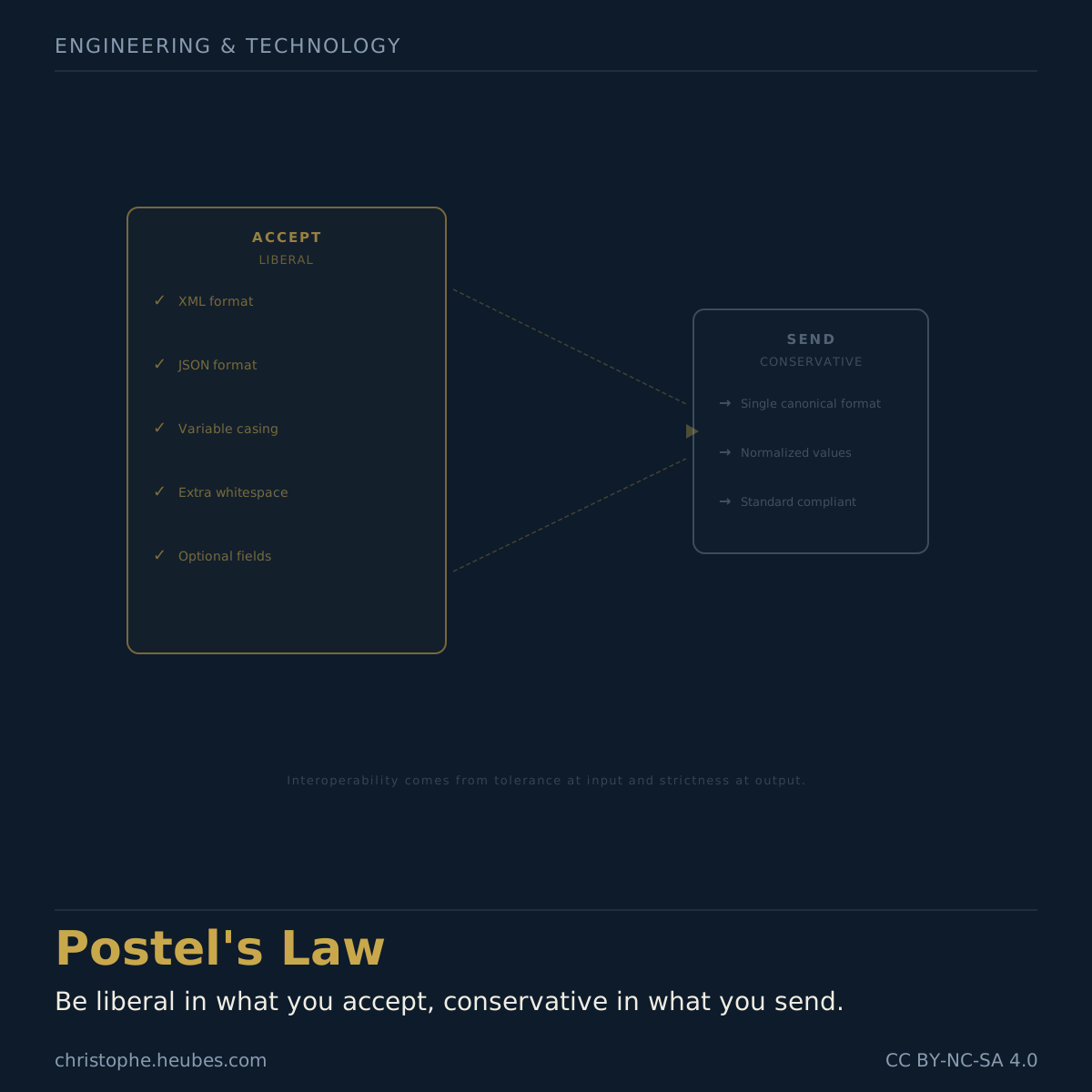
Be liberal in what you accept, conservative in what you send.
Definition
Postel’s Law (the Robustness Principle) was stated by Jon Postel in the TCP protocol specification in 1980. His original formulation: “Be conservative in what you do, be liberal in what you accept from others.”
The idea is simple: for a network or system to be robust, implementations must tolerate others’ imperfections (slightly different formats, missing fields, unexpected spacing) while emitting perfectly standard-compliant messages.
Why it matters
This principle contributed to the extraordinary robustness of the Internet. Web browsers became champions of tolerance: they display malformed HTML, unknown attributes, incorrectly closed tags: without crashing. This permissiveness at input allowed the web to grow even with imperfect publishing tools.
However, the principle is also controversial: excessive tolerance at input can propagate malformed behaviors and make diagnosis difficult. Some engineers now advocate a stricter approach to force better discipline from emitters.
Concrete examples
Web browsers: Chrome and Firefox display invalid HTML without error, liberal at input.
HTTP servers: they return strictly formatted responses per RFC, conservative at output.
JSON parsers: modern implementations accept trailing commas or comments, even though the JSON standard forbids them.
Email clients: they accept malformed emails at input, but only send RFC-compliant messages.