Availability Bias
We judge as probable what comes easily to mind.
Definition
The availability bias (or availability heuristic) is a mental shortcut: to assess the frequency or probability of an event, we rely on how easily examples come to memory. What is vivid, recent, or emotionally charged seems more probable: even if it is statistically rare.
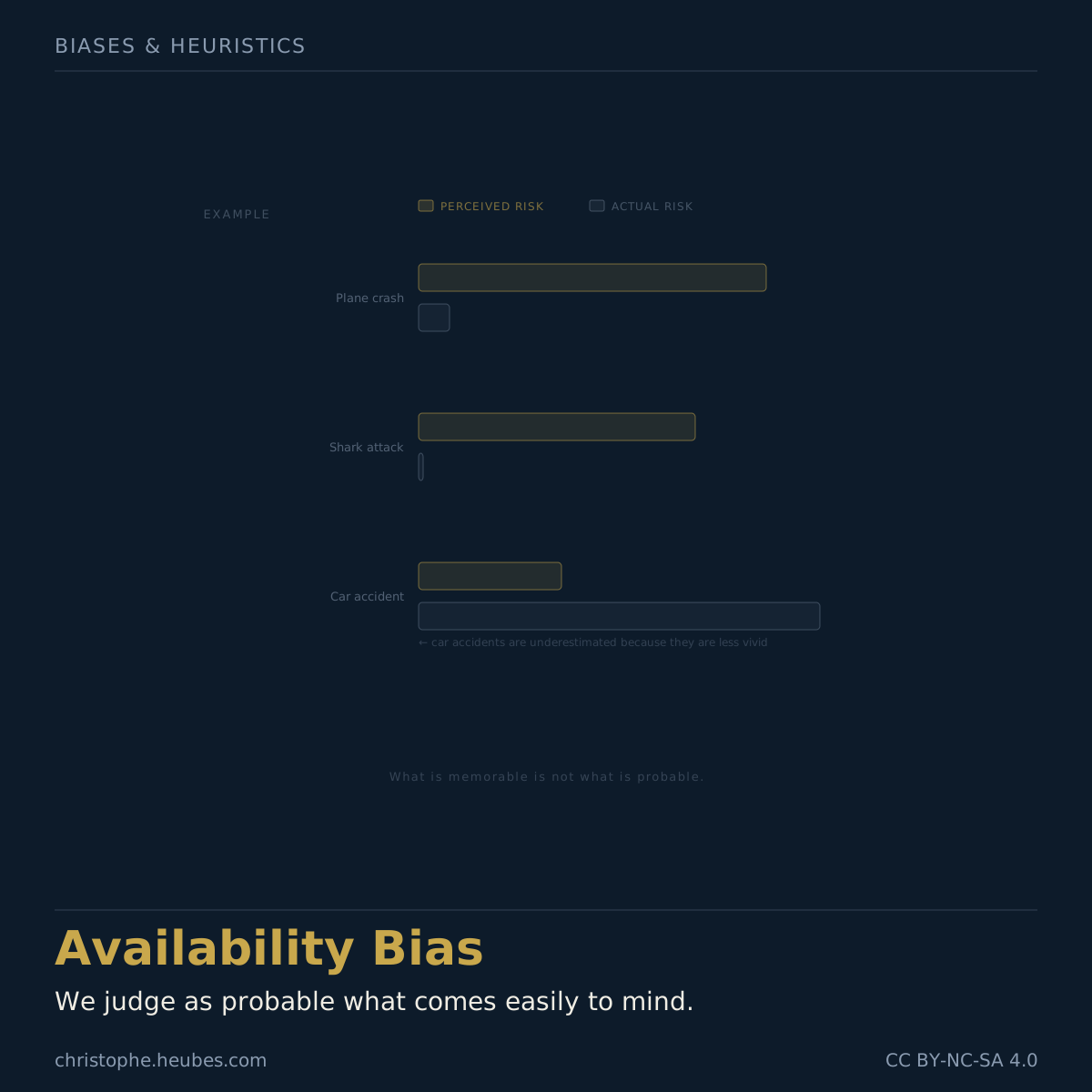
Kahneman and Tversky showed in 1973 that people massively overestimate spectacular risks (plane crashes, shark attacks) and underestimate common but mundane ones (car accidents, cardiovascular disease).
Why it matters
This bias distorts our assessment of risk, policy, and investment decisions. It explains why intense media coverage of rare events (terrorist attacks, plane crashes) causes individuals and governments to overreact, while slow and invisible threats (obesity, tobacco, climate change) are chronically undertreated.
It also plays a key role in financial markets: after a recent negative event, investors overestimate the probability of recurrence.
Concrete examples
Terrorism and air travel: after a publicized attack, people avoid flying, even though driving is statistically far more dangerous.
Disaster insurance: insurers sell surge policies against natural disasters after an earthquake, and far fewer before one.
Project management: managers who recently experienced a delayed project overestimate the risk of delay in future estimates.
The lottery effect: winners featured in newspapers make gains more mentally available, inflating ticket purchases.