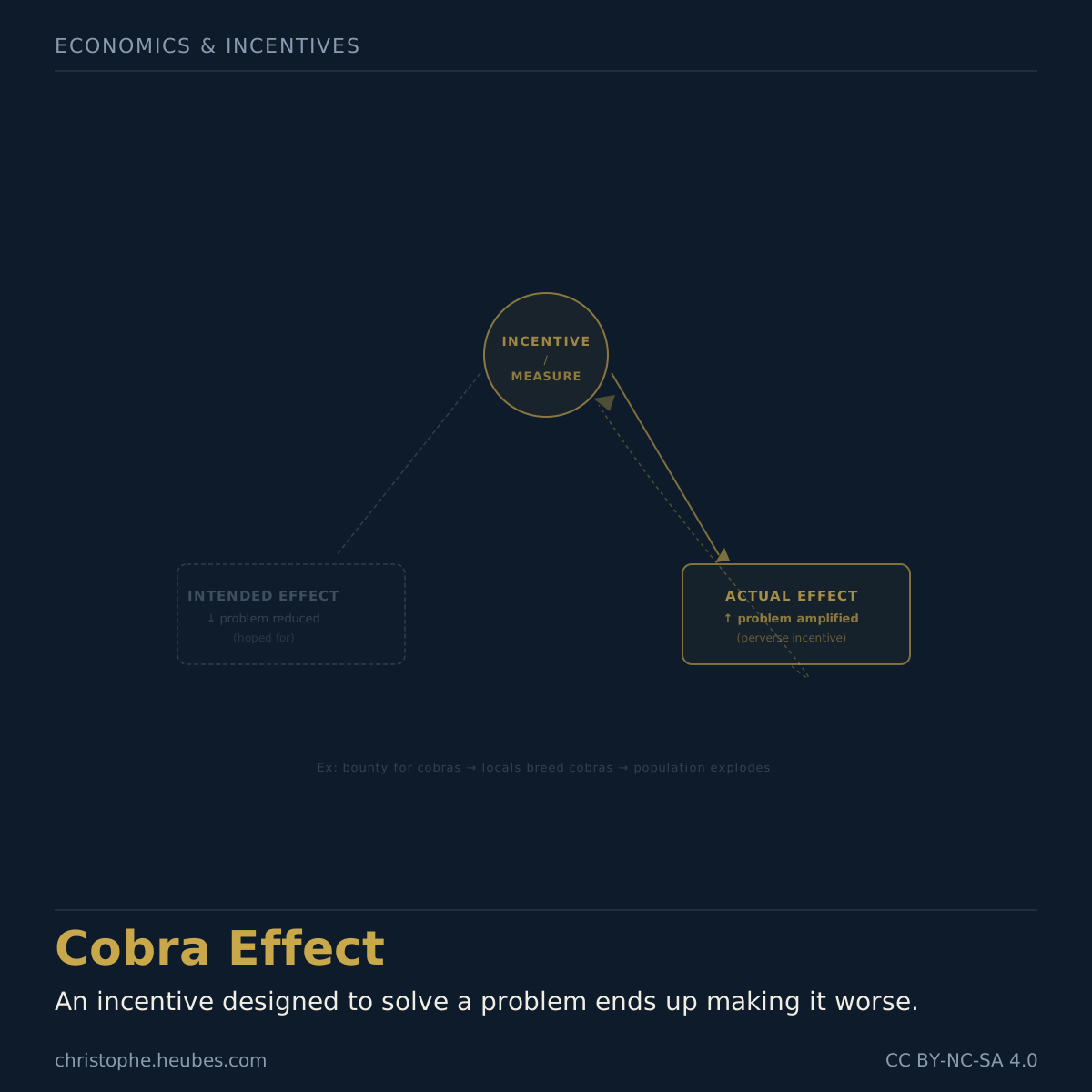
Cobra Effect
An incentive designed to solve a problem ends up making it worse.
Definition
The cobra effect describes situations where an incentive policy, however well-intentioned, produces exactly the opposite of the desired effect. The bounty creates rational individual behavior, breeding cobras, that is catastrophic for the system as a whole.
This phenomenon occurs when the rules of the game are misaligned with the objective. Actors optimize what is measured, not what matters. The stronger the reward, the more likely the gaming.
Why it matters
The cobra effect is a warning against naive incentive design. It shows that individuals are reactive, they adapt to rules, often creatively. Designing a policy without anticipating these adaptations risks worsening the very problem it was meant to solve.
Concrete examples
Cobras in India: bounty for dead cobras, cobra farming in response, mass release upon programme cancellation.
Rat tails in Vietnam: bounty for rat tails brought in, rats had their tails cut off and were released alive to keep producing more.
Performance metrics: KPIs on number of calls handled or ticket closure rates push agents to optimize the number rather than the quality of resolution.
Standardized school tests: teachers “teach to the test” rather than for deep understanding.