Kerr's Law
We reward A, we hope for B, and we get A.
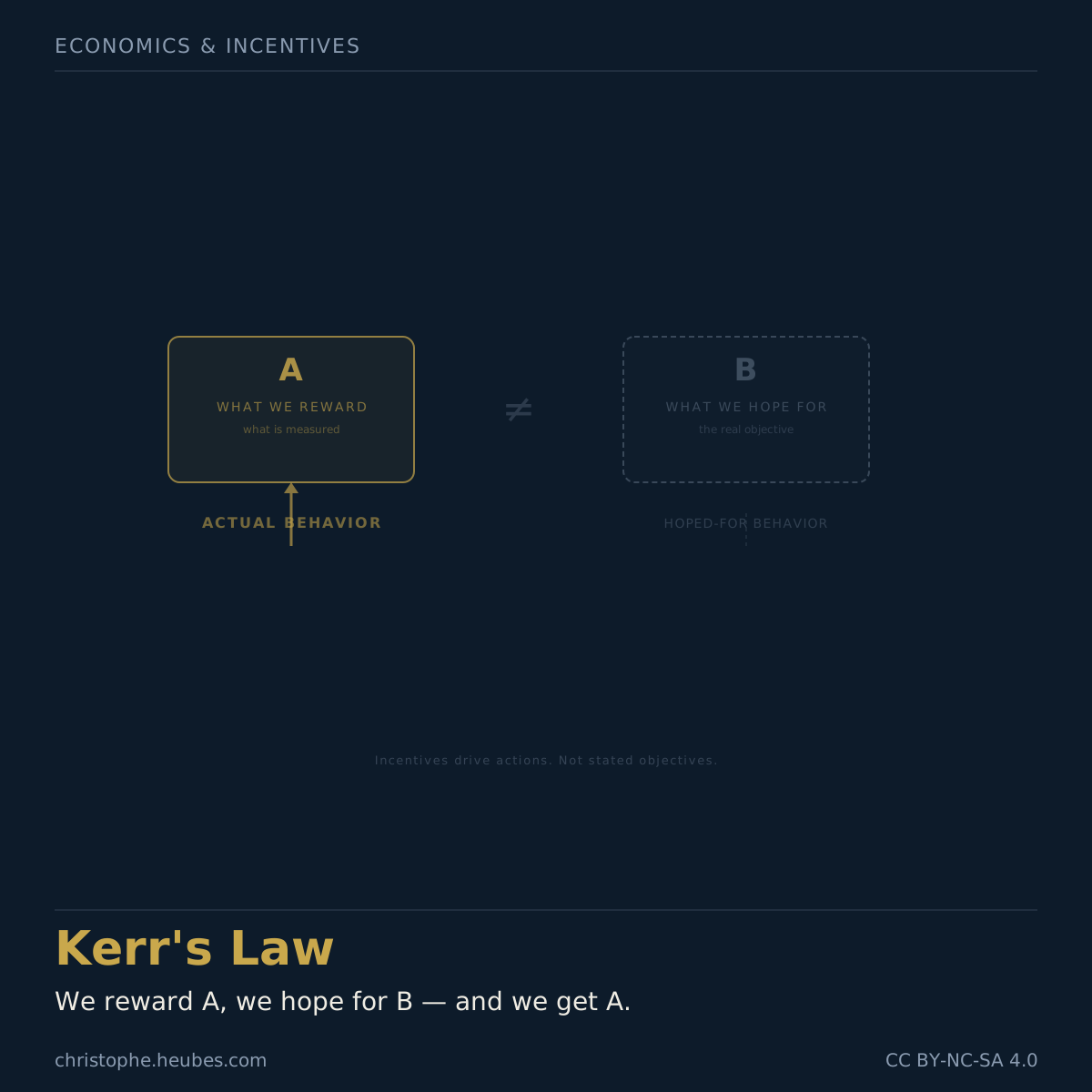
Definition
Kerr’s Law, formalized in the paper “On the Folly of Rewarding A, While Hoping for B” (1975), starts from a simple observation: in almost every organization, what is rewarded and what is hoped for are two different things.
Individuals are rational. They do what they are rewarded for, not what they are told is wanted. If a bonus is tied to gross revenue, salespeople will sell at any cost. If advancement depends on publication count, researchers will publish often and superficially. Behavior follows incentives, not rhetoric.
Why it matters
This law is fundamental to management and organizational design. It forces explicit alignment between what is measured and what is wanted. A stated goal without an associated incentive remains wishful thinking. And a poorly designed incentive can destroy the culture it was meant to reinforce.
Concrete examples
Finance: short-term performance is rewarded (annual bonuses) while hoping for prudent long-term risk management.
Medicine: some systems pay per act (consultation, exam) rather than for patient health, encouraging unnecessary procedures.
Customer support: a KPI on average handling time pushes agents to resolve fast rather than well.
Startups: growth metrics (MAU, GMV) rewarded at the expense of product quality or margin.